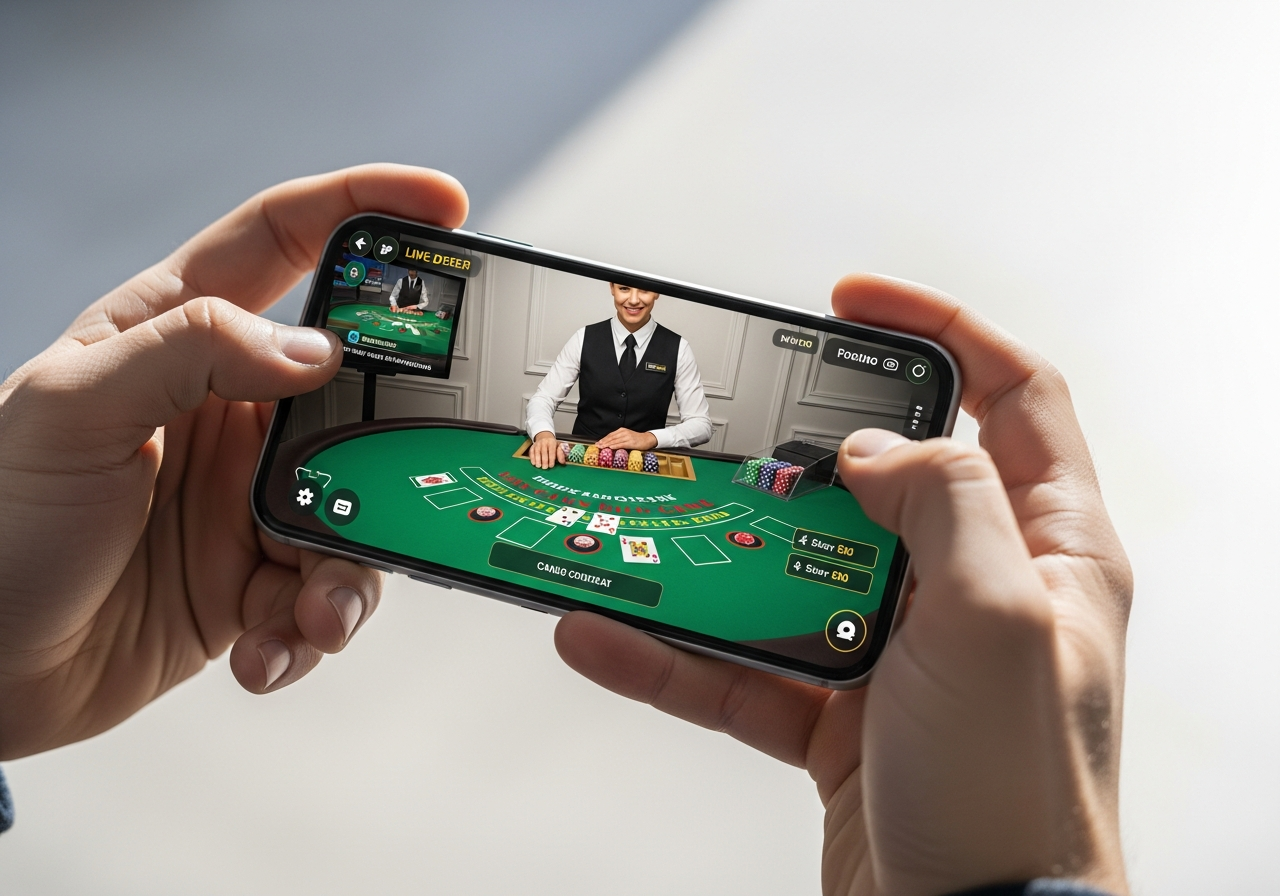
Mobile live dealer games consume dramatically more data than traditional casino games, using 150-350MB per hour compared to slots that typically require only 5-10MB per hour. This massive difference stems from the real-time HD video streaming required to bring authentic casino experiences directly to your mobile device. In legal USA states like New Jersey, Pennsylvania, and Michigan, mobile casino enthusiasts are discovering that their data consumption can quickly spiral without proper planning.
The emergence of 5G networks promises to revolutionize mobile gambling experiences, but understanding your data usage remains critical for managing costs and ensuring smooth gameplay. Real-time streaming data loads place significant demands on both your data plan and device performance, making it essential to understand how different games, network types, and quality settings impact your monthly usage.
Understanding Data Usage in Live Dealer Games
Live dealer games fundamentally differ from traditional Random Number Generator (RNG) casino games in their data requirements. While RNG games like slots generate outcomes through software algorithms requiring minimal data transfer, live dealer games stream continuous HD video from real casino studios with professional dealers managing actual gaming equipment. This streaming technology creates an authentic casino atmosphere but demands substantial bandwidth.
The USA mobile network infrastructure, built primarily on 4G LTE with expanding 5G coverage, provides varying levels of performance for live streaming casino content. Most carriers offer download speeds between 20-50 Mbps on 4G networks, which typically supports standard definition streaming but may struggle with multiple HD video feeds during peak usage periods.
Modern live dealer platforms often feature multiple camera angles, chat functionality, and real-time graphics overlays that enhance the gaming experience but increase data consumption. The interactive nature of these games requires constant two-way communication between your device and the casino servers, unlike slots where data transfer occurs primarily during spins.
Network latency becomes particularly crucial in live dealer games, as delays can disrupt the natural flow of gameplay and create frustrating experiences. USA mobile networks typically experience latency ranges from 30-50ms on 4G, which generally provides acceptable performance for most live dealer games but may occasionally cause minor delays during network congestion.
Why Live Streams Consume More Data
High-definition video streaming forms the backbone of live dealer games, requiring continuous data transmission to maintain smooth, buffer-free gameplay. Most live dealer platforms stream at 720p or 1080p resolution to ensure clear visibility of cards, dice, and roulette wheels, consuming 2-4 times more data than standard definition alternatives.
Multi-camera viewing options further amplify data usage, as many platforms offer overhead shots, dealer close-ups, and table-wide angles that players can switch between during gameplay. Each additional camera feed increases bandwidth requirements, with some premium games offering up to six different viewing angles simultaneously.
Real-time interactive features like live chat, betting interfaces, and game statistics require additional data overhead beyond the video stream. These elements update continuously throughout gameplay sessions, creating consistent background data usage that accumulates significantly over extended gaming periods.
Slots vs Live Dealer: Quick Comparison
| Game Type | Data per Hour (MB) | Notes |
|---|---|---|
| Classic Slots | 5-15 MB | Static graphics, minimal data transfer |
| Video Slots | 15-30 MB | Animated features, bonus rounds |
| Live Blackjack | 180-280 MB | HD video stream, real-time interaction |
| Live Roulette | 200-320 MB | Multiple camera angles, wheel close-ups |
| Live Baccarat | 160-250 MB | Standard HD stream, card focus |
Data Consumption Breakdown by Game
Different live dealer games consume varying amounts of data based on their visual complexity, number of camera angles, and gameplay speed. Blackjack typically requires 60-150MB per hour on low quality settings, while high-definition streams can consume 180-280MB hourly. The relatively static nature of card games makes them more data-efficient than games with moving elements.
Roulette games generally consume similar data volumes to blackjack, with low quality streams using 70-160MB per hour and HD versions requiring 200-320MB. The spinning wheel and ball tracking features add visual complexity that increases bandwidth requirements compared to card-only games.
Game show-style live dealer games like Crazy Time or Monopoly Live consume the highest data volumes, often exceeding 400MB per hour due to elaborate studio setups, multiple interactive elements, and bonus round animations. These games push the boundaries of mobile data consumption and require unlimited or high-capacity data plans for regular play.
| Game | Low Quality (MB/hr) | HD Quality (MB/hr) | USA Avg Plan Fit |
|---|---|---|---|
| Live Blackjack | 60-120 | 180-280 | 15-35 hours/month (5GB plan) |
| Live Roulette | 70-140 | 200-320 | 12-30 hours/month (5GB plan) |
| Live Baccarat | 55-110 | 160-250 | 18-40 hours/month (5GB plan) |
| Live Poker | 65-130 | 190-300 | 15-35 hours/month (5GB plan) |
| Game Shows | 120-200 | 350-500 | 8-20 hours/month (5GB plan) |
| Lightning Games | 80-150 | 220-350 | 12-28 hours/month (5GB plan) |
| Multi-Hand Games | 90-170 | 250-400 | 10-25 hours/month (5GB plan) |
Popular USA Live Games Data Stats
- Live Blackjack remains the most data-efficient live dealer option, consuming approximately 180-280MB per hour in HD quality, making it suitable for players with moderate data plans
- Live Roulette with multiple camera angles typically uses 200-320MB hourly, with European and American variants showing minimal difference in data consumption
- Evolution Gaming’s Lightning series games add special effects and animations that increase data usage by 15-25% compared to standard versions of the same games
- Live Baccarat squeeze variants consume additional data due to slow-reveal card animations, adding roughly 30-50MB per hour to standard baccarat streams
- Multi-table tournament-style games can exceed 400MB per hour when displaying multiple simultaneous video feeds and leaderboard updates
- Speed versions of live games (Speed Blackjack, Speed Roulette) maintain similar data consumption rates despite faster gameplay, as video quality remains constant
Impact of Network Type on Data Usage
Network infrastructure significantly impacts both data consumption patterns and gameplay quality for mobile live dealer games. 4G LTE networks typically provide download speeds ranging from 20-50 Mbps under optimal conditions, which generally supports HD streaming but may experience performance variations during peak usage periods or in areas with network congestion.
5G networks revolutionize mobile gambling experiences with dramatically reduced latency and increased bandwidth capacity. Ultra-low latency of 1-5ms compared to 4G’s 30-50ms creates more responsive gameplay, while increased speeds of 100-1000 Mbps enable seamless HD streaming without buffering interruptions.
Network efficiency improvements in 5G technology can actually reduce total data consumption for equivalent video quality through advanced compression algorithms and optimized streaming protocols. This means players may experience better visual quality while using slightly less data compared to 4G connections.
Geographic location within the USA significantly affects network performance, with urban areas typically offering better 5G coverage and faster speeds compared to rural regions that may still rely primarily on 4G infrastructure. Players in major metropolitan areas often experience 2-3 times faster speeds than those in rural locations.
4G Limitations for Live Play
4G networks often struggle with consistent HD video streaming during peak usage hours, typically between 7-11 PM when network congestion increases significantly. Buffering interruptions can disrupt gameplay flow and potentially cause disconnections during critical moments like card dealing or ball drops in roulette.
Upload speeds on 4G networks, typically ranging from 2-10 Mbps, can limit the responsiveness of interactive features like live chat and betting interfaces. This creates delays between player actions and game responses that can impact the authentic live casino experience that mobile players seek.
5G Revolution for USA Mobile Casinos
- Ultra-low latency of 1-5ms eliminates virtually all delays between player actions and game responses, creating seamless interaction with live dealers and immediate betting confirmations
- Enhanced bandwidth capacity supports multiple simultaneous HD streams without quality degradation, enabling picture-in-picture viewing and multi-table gameplay on mobile devices
- Improved network reliability reduces disconnection rates by up to 70% compared to 4G, ensuring uninterrupted gameplay during extended sessions
- Advanced compression technologies in 5G infrastructure can reduce data consumption by 10-15% while maintaining superior video quality compared to 4G streams
- Network slicing capabilities allow carriers to prioritize gaming traffic, ensuring consistent performance even during peak usage periods in densely populated areas
USA Legal States and Mobile Casino Access
- New Jersey leads USA mobile casino adoption with over 15 licensed operators offering live dealer games, supported by robust 5G coverage from all major carriers
- Pennsylvania’s regulated market features 12+ mobile casino apps with optimized live dealer streaming designed for varying network conditions across urban and rural areas
- Michigan’s newer market includes state-of-the-art mobile platforms specifically designed for 5G networks, offering superior video quality and reduced data consumption
- West Virginia provides mobile casino access with particular attention to rural network limitations, featuring adaptive streaming quality based on connection speed
- Connecticut’s recently launched market emphasizes mobile-first experiences with live dealer games optimized for both WiFi and cellular connections
- Delaware maintains the USA’s first regulated online gambling market with mobile apps that have evolved to support modern live streaming technologies
- Nevada focuses primarily on online poker but offers some live dealer games through mobile platforms optimized for the state’s extensive 5G coverage in Las Vegas and Reno
State-by-State Data Plan Recommendations
| State | Top Carriers | Recommended Data for Live Play |
|---|---|---|
| New Jersey | Verizon, AT&T, T-Mobile | Unlimited or 15GB+ for regular play |
| Pennsylvania | Verizon, AT&T, T-Mobile | 10GB minimum, unlimited preferred |
| Michigan | Verizon, AT&T, T-Mobile | Unlimited 5G for optimal experience |
| West Virginia | Verizon, AT&T | 8GB minimum due to rural coverage |
| Connecticut | Verizon, AT&T, T-Mobile | 12GB+ for moderate gaming |
| Delaware | Verizon, AT&T | 6GB sufficient for casual play |
Tips to Minimize Mobile Data Usage
- Adjust video quality settings to standard definition (480p) instead of HD when data conservation is priority, reducing consumption by 40-60% while maintaining playable visual clarity
- Utilize WiFi networks whenever possible for live dealer gaming sessions, reserving mobile data for occasional play when away from reliable wireless connections
- Close background apps and disable automatic updates while gaming to prevent unnecessary data consumption that can interfere with streaming quality
- Choose single-camera view games over multi-angle options, as additional camera feeds can increase data usage by 20-30% per additional stream
- Set monthly data usage alerts through your carrier or device settings to monitor consumption and avoid overage charges during extended gaming sessions
- Schedule gaming sessions during off-peak hours (typically 10 AM – 4 PM) when network congestion is lower and streaming efficiency is optimized
- Select games with simpler visual elements like classic blackjack over feature-rich variants with animations and special effects that consume additional bandwidth
App Settings for Data Savings
Most mobile casino apps offer resolution control settings within their video streaming options, typically accessible through settings menus or gear icons during gameplay. Standard definition settings (480p) can reduce data consumption by 40-60% compared to HD options while maintaining sufficient visual clarity for most gaming scenarios.
Advanced apps feature adaptive streaming technology that automatically adjusts video quality based on connection speed and stability. These systems monitor real-time network performance and can dynamically switch between quality levels to prevent buffering while minimizing unnecessary data usage during optimal connection periods.
Some platforms offer “data saver” modes specifically designed for mobile play, which combine reduced video quality with simplified graphics interfaces and disabled non-essential features like animated backgrounds or promotional overlays. These modes can reduce total data consumption by up to 50% while preserving core gameplay functionality.
Data Plan Strategies
| Plan Type | Pros | Cons | Live Hours/GB |
|---|---|---|---|
| Unlimited Premium | No usage limits, priority network access | Higher monthly cost ($80-120) | 3-4 hours |
| Unlimited Basic | No overage charges, moderate cost | Throttling after 50GB, slower speeds | 2-3 hours |
| 15GB Tiered | Lower cost, sufficient for casual play | Overage charges, usage monitoring needed | 3-5 hours |
| 5GB Budget | Lowest monthly cost ($30-50) | Limited gaming hours, frequent monitoring | 4-6 hours |
5G vs 4G: Performance Comparison Table
The performance differential between 4G and 5G networks creates substantially different experiences for mobile live dealer gaming. While 4G networks provide adequate performance for most gaming scenarios, 5G’s enhanced capabilities unlock premium features and superior reliability that significantly improve the mobile casino experience.
Data efficiency improvements in 5G networks can actually reduce consumption while providing better quality, as advanced compression algorithms and optimized streaming protocols deliver more video information per megabyte consumed. This technological advantage makes 5G particularly attractive for frequent mobile casino players concerned about data costs.
| Metric | 4G | 5G | Impact on Live Dealer |
|---|---|---|---|
| Download Speed | 20-50 Mbps | 100-1000 Mbps | Eliminates buffering, enables 4K streaming |
| Latency | 30-50ms | 1-5ms | Instant betting response, real-time interaction |
| Connection Stability | 85-92% uptime | 95-99% uptime | Fewer disconnections during gameplay |
| Data Efficiency | Standard compression | Advanced algorithms | 10-15% less data for same quality |
| Multi-streaming | Limited capability | Multiple HD streams | Multi-table play, picture-in-picture |
Future 5G Coverage in USA
5G network expansion across the USA follows a primarily urban-first deployment strategy, with major carriers focusing on metropolitan areas before expanding to suburban and rural regions. Current coverage maps show 5G availability in over 200 cities nationwide, with T-Mobile leading in coverage area while Verizon provides faster speeds in densely covered zones.
Rural 5G deployment faces significant infrastructure challenges, with many areas expected to rely on 4G networks for several more years. This geographic divide creates varying mobile casino experiences across different regions, with urban players enjoying premium streaming quality while rural players may need to optimize settings for 4G performance.
Mid-band 5G coverage, offering the best balance of speed and coverage area, is expanding rapidly across suburban areas and smaller cities. This network tier provides substantial improvements over 4G for live dealer gaming without the limited range restrictions of ultra-fast millimeter wave 5G networks concentrated in urban cores.
Battery and Device Considerations
5G connectivity significantly increases battery consumption compared to 4G networks, with live dealer gaming sessions on 5G devices typically reducing battery life by 15-25% faster than equivalent 4G usage. The increased power draw stems from 5G modems requiring more energy to maintain high-speed connections and process larger amounts of streaming data.
Device heating becomes more pronounced during extended live dealer sessions, particularly on 5G connections where intensive data processing can cause smartphones to reach uncomfortable temperatures. Modern flagship devices include thermal management systems to prevent overheating, but sustained gaming sessions may trigger performance throttling to protect internal components.
Screen brightness and display technology significantly impact battery consumption during live dealer games, with OLED displays showing more efficient power usage for casino games featuring dark backgrounds, while LCD screens maintain more consistent power draw regardless of displayed content. Players can extend gaming sessions by reducing screen brightness and enabling power saving modes that don’t affect network performance.
Best Devices for Low Data Live Play
- iPhone 13 Pro and newer models feature efficient A-series chips with dedicated 5G modems that optimize data usage while maintaining superior video streaming performance for live casino games
- Samsung Galaxy S22 series offers adaptive refresh rate displays that automatically adjust based on content, reducing battery consumption during static gambling interfaces while maintaining smooth video during dealer interactions
- Google Pixel 6 and newer devices include AI-powered data compression that can reduce live streaming consumption by 8-12% without noticeable quality degradation
- OnePlus devices with OxygenOS provide granular network control options, allowing players to set specific data limits and quality preferences for gambling applications
- Gaming-focused phones like ASUS ROG and Razer devices offer enhanced cooling systems that prevent thermal throttling during extended live dealer sessions
- Mid-range devices with Snapdragon 750G or equivalent processors provide adequate performance for HD live streaming while maintaining better battery efficiency than flagship models
Pros and Cons of Mobile Live Dealer on Data Plans
Mobile live dealer gaming presents a complex balance between convenience and data consumption that varies significantly based on individual usage patterns and data plan structures. Understanding these trade-offs helps players make informed decisions about their mobile gambling habits and data plan requirements.
The convenience factor of accessing live dealer games anywhere with cellular coverage creates unprecedented flexibility for players who previously required WiFi connections or desktop computers. However, this freedom comes with potential cost implications that can significantly impact monthly wireless bills for players without unlimited data plans.
| Aspect | Pros | Cons |
|---|---|---|
| Convenience | Play anywhere with cell coverage, no WiFi dependency | High data usage can lead to overage charges |
| Cost Management | Predictable with unlimited plans, quality settings control | Tiered plans risk expensive overages, premium plans costly |
| Gaming Experience | 5G enables HD quality, low latency, multi-table play | 4G limitations, potential buffering, battery drain |
| Flexibility | Commute gaming, travel access, break-time sessions | Network dependency, coverage gaps, data monitoring needed |
| Device Impact | Modern phones handle streaming well, cooling systems | Increased battery drain, potential overheating, thermal throttling |
Player Experiences in USA
Survey data from USA mobile casino players reveals distinct preferences based on demographic and geographic factors. Urban millennials with unlimited 5G plans report high satisfaction with mobile live dealer gaming, citing convenience and quality as primary benefits. These players typically consume 8-15GB monthly on casino streaming, well within their plan limits.
Rural players face different challenges, with many reporting frustrating experiences due to inconsistent 4G coverage and limited 5G availability. These users often prefer scheduled gaming sessions on WiFi rather than mobile data, using cellular connections only for short sessions or when traveling through areas with reliable coverage.
Older demographics show more conservative data usage patterns, often preferring lower quality settings to manage consumption and costs. Players aged 45+ frequently choose standard definition streaming to maintain longer gaming sessions within their data allowances, prioritizing gameplay duration over visual quality.
Geographic analysis shows significant regional variations in mobile casino adoption, with East Coast states like New Jersey and Pennsylvania leading in mobile live dealer usage due to strong carrier infrastructure and established legal frameworks. Western markets show growing adoption as 5G networks expand and more states consider gambling legislation.