
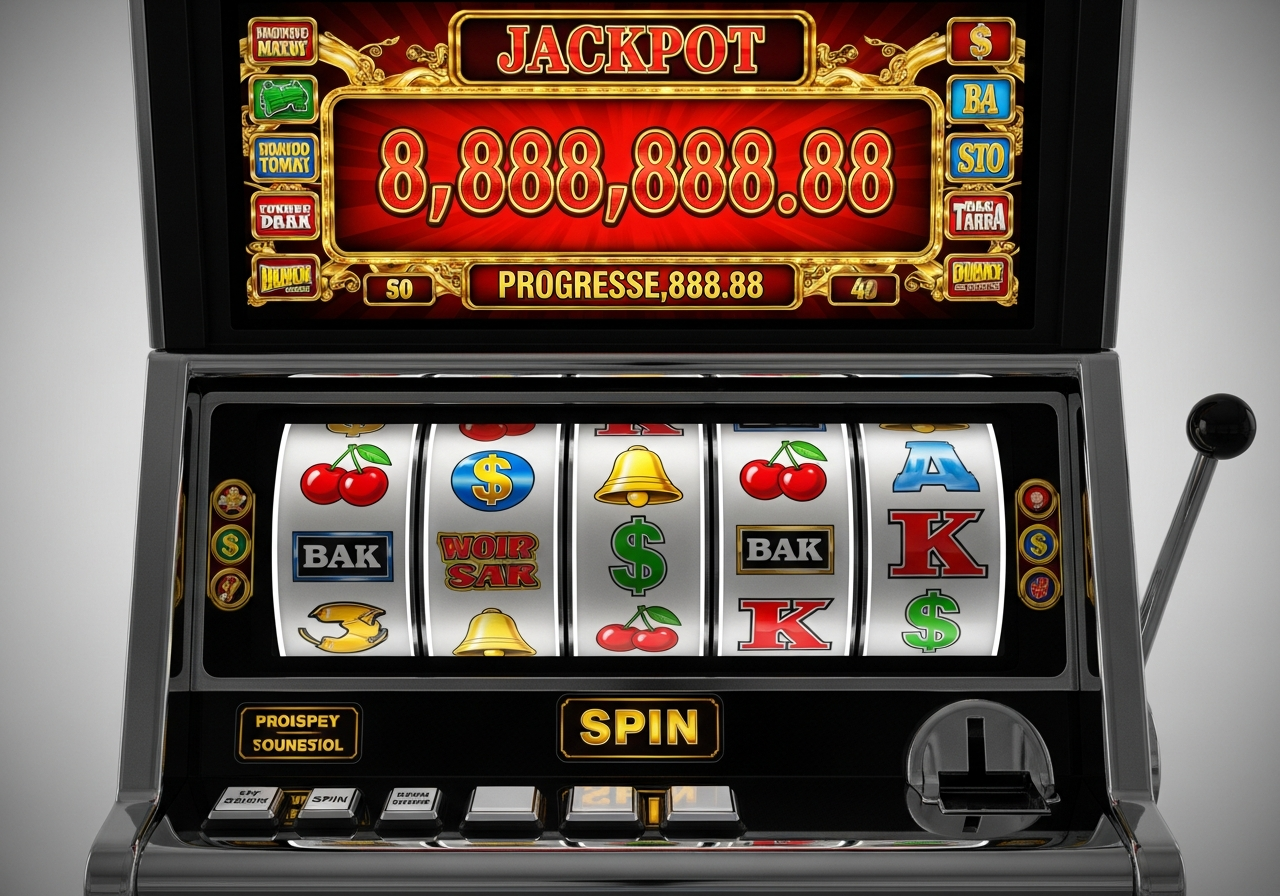
Every spin on a progressive slot machine contributes a small percentage to the jackpot pool, and this contribution rate is a crucial component of the game’s Return to Player (RTP) structure. In regulated US states like Nevada and New Jersey, these rates typically range from 0.1% to 10% of each wager, with popular games like Megabucks contributing over 10% per spin to create those massive multi-million dollar prizes. This isn’t an extra fee – it’s simply part of how your bet is allocated between regular payouts and the progressive jackpot.
Understanding jackpot contribution rates helps players make informed decisions about which slots offer the best value for their playing style. Wide-area progressive networks can grow jackpots incredibly fast when thousands of players across multiple casinos contribute simultaneously, while standalone progressives build more slowly but often hit more frequently. We’ll break down the math, show real contribution rate examples from major US slot games, and explain exactly how these rates impact your overall returns.
What is Slot Jackpot Contribution Rate?
The jackpot contribution rate represents the percentage of each wager that gets added to the progressive jackpot pool rather than being paid out as regular wins. For example, if you’re playing a slot with a 2% contribution rate and bet $1 per spin, exactly $0.02 from that bet goes directly into the jackpot fund. This system operates transparently in regulated US markets, with states like Nevada requiring casinos to disclose these rates in the game’s help files or paytable information.
Progressive slots differ fundamentally from standard slots in their payout structure, as they reserve a portion of each bet for the growing jackpot rather than distributing all funds through regular symbol combinations. While a standard slot might return 96% of all wagers through its fixed paytable, a progressive slot with the same 96% RTP might only return 94% through regular wins, with the remaining 2% building the jackpot until someone hits it.
This contribution system creates the excitement of ever-growing prizes while maintaining fair gaming standards. In Nevada’s regulated environment, popular games like Wheel of Fortune slots typically contribute 1-3% per spin, while mega-progressives like Megabucks can dedicate over 10% of each wager to jackpot funding, explaining why these games can reach astronomical prize levels.
How It Differs from RTP
RTP (Return to Player) represents the total theoretical return of all wagers over time, but in progressive slots, this return is split between base game payouts and jackpot contributions. A slot advertising 96% RTP might actually provide only 94% through regular spins, with the remaining 2% allocated to the progressive jackpot pool that pays out less frequently but in much larger amounts.
This split means that your short-term playing experience is based on the reduced base RTP, while the full advertised RTP only applies when accounting for the eventual jackpot winner. Understanding this distinction is crucial for bankroll management, as progressive slots often feel “tighter” during regular play compared to non-progressive games with similar total RTP percentages.
US Regulatory Context
- Nevada Gaming Control requires all progressive slots to clearly display contribution rates in game documentation and maintain accurate jackpot meters
- New Jersey Division of Gaming Enforcement mandates quarterly reporting of progressive pool contributions and payouts for regulatory oversight
- Pennsylvania Gaming Control Board requires operators to post progressive rules including minimum and maximum contribution percentages
- Michigan Gaming Control Board enforces transparency standards requiring jackpot contribution disclosure in online slot help menus
- Connecticut Department of Consumer Protection oversees tribal casino progressives with similar disclosure requirements for player protection
- Multi-state progressive networks must comply with each participating state’s individual regulatory requirements for contribution rate transparency
How Contribution Rates Build Jackpots Per Spin
Every single spin across all linked machines simultaneously feeds the progressive jackpot, creating rapid accumulation that can build six or seven-figure prizes in weeks or months. When a player at any participating casino spins a linked progressive, their contribution rate percentage is instantly added to the shared pool, which explains how games like Megabucks can grow from their $1 million seed to $10+ million relatively quickly.
Once a jackpot hits, the pool resets to its predetermined seed amount (usually funded by the casino or game manufacturer), and the accumulation process starts over immediately. This reset mechanism ensures that there’s always a substantial prize available even right after a major win, maintaining player interest and continued contributions from every subsequent spin.
Math Behind Per-Spin Funding
The fundamental formula for jackpot growth is: Contribution Amount = Contribution Rate × Bet Size × Number of Spins. For a network of 1,000 machines averaging $2 bets with a 2% contribution rate, each complete round of spins across all machines adds $40 to the jackpot ($2 × 0.02 × 1,000). With players spinning approximately 600 times per hour, this network could theoretically add $24,000 hourly to the progressive pool.
Network effects create multiplier impacts where larger casino networks grow jackpots exponentially faster than smaller ones. A 100-machine network might take months to build a $500,000 jackpot, while a 5,000-machine wide-area network could reach the same amount in days. This mathematical advantage explains why games like Megabucks, which link hundreds of casinos across Nevada, consistently offer the largest prizes in the industry.
The contribution calculation also factors in bet denomination, as most progressives require maximum bets for jackpot eligibility. A $5 max bet slot with 3% contribution adds $0.15 per spin, while penny slots with $2.50 max bets at the same rate contribute only $0.075, demonstrating how higher denomination games build larger jackpots more quickly.
Typical Contribution Rates in US Slots
| Game | Jackpot Portion % | Total RTP Example | Base RTP | Source Notes |
|---|---|---|---|---|
| Megabucks | 10.2% | 89.1% | 78.9% | Nevada Gaming Control Board |
| Blazing 7s Progressive | 8.1% | 92.4% | 84.3% | Manufacturer PAR sheets |
| Wheel of Fortune Triple Extreme | 2.8% | 94.2% | 91.4% | IGT public documentation |
| Lightning Link | 1.5% | 94.0% | 92.5% | Aristocrat game rules |
| Quick Hit Platinum | 1.2% | 93.8% | 92.6% | Bally Technologies specs |
| Buffalo Grand | 1.0% | 94.9% | 93.9% | Aristocrat public filings |
| Cleopatra Plus | 0.9% | 95.1% | 94.2% | IGT help documentation |
| 88 Fortunes | 0.7% | 95.6% | 94.9% | Scientific Games data |
Low vs High Contribution Examples
Low contribution rate slots (under 1%) typically offer smaller jackpots but hit more frequently, making them suitable for players who prefer regular progressive wins over massive but rare payouts. Games like 88 Fortunes with 0.7% contribution might award jackpots in the thousands rather than millions, but these prizes reset and build again within weeks rather than months.
High contribution games like Megabucks dedicate over 10% of each wager to jackpot funding, creating life-changing prizes that can exceed $10 million but may go months between hits. These games sacrifice significant base game RTP to fund their massive top prizes, making them more suitable for players specifically chasing the dream of a mega-jackpot rather than consistent smaller wins.
Statewide Progressives Impact
| Progressive Type | Avg Contribution | Network Size | US States |
|---|---|---|---|
| Nevada Megabucks | 10.2% | 750+ machines | Nevada only |
| Multi-State Wheel of Fortune | 2.5% | 2,400+ machines | NV, NJ, PA, MI |
| New Jersey Quartermania | 5.8% | 180+ machines | New Jersey only |
| Pennsylvania Millionaire | 4.2% | 320+ machines | Pennsylvania only |
| Michigan MegaJackpots | 3.1% | 450+ machines | Michigan only |
RTP Breakdown: Base vs Jackpot Contribution
| Slot Type | Base RTP | Contribution % | Total RTP | Hold % |
|---|---|---|---|---|
| Non-Progressive | 94.0% | 0.0% | 94.0% | 6.0% |
| Small Progressive | 93.2% | 0.8% | 94.0% | 6.0% |
| Medium Progressive | 91.5% | 2.5% | 94.0% | 6.0% |
| Large Progressive | 88.2% | 5.8% | 94.0% | 6.0% |
| Mega Progressive | 83.8% | 10.2% | 94.0% | 6.0% |
| Multi-Level Progressive | 89.7% | 4.3% | 94.0% | 6.0% |
The relationship between base RTP and jackpot contribution reveals how progressive slots maintain competitive total returns while funding their prize pools. A typical 94% RTP progressive slot might deliver only 91.5% through regular play, with the remaining 2.5% allocated to jackpot contributions. This explains why progressive slots can feel less rewarding during regular play compared to non-progressive games with similar advertised RTP percentages.
Payback Shift as Jackpot Grows
As progressive jackpots grow larger, they can temporarily exceed their mathematically expected value, creating positive expectation opportunities for informed players. When a normally $500,000 jackpot reaches $2 million, the effective RTP increases beyond the base programmed percentage, though predicting exactly when this threshold is reached requires complex calculations involving hit frequency and network size.
However, most mega-progressives like Megabucks are designed to rarely if ever reach positive expectation territory, as their enormous jackpots are offset by correspondingly low hit frequencies. The effective RTP boost from an oversized jackpot is usually negligible unless the prize has grown well beyond its normal reset range for an extended period.
Where to Find Contribution Rates on US Slots
- Check the game’s main help menu or information button, usually accessed through a “?” or “i” icon on the main screen
- Look for “Game Rules” or “Paytable” sections that often include progressive contribution details in fine print
- Access the “Progressive Rules” subsection specifically, which regulatory requirements mandate must display contribution percentages
- Review the slot’s PAR (Paytable and Reel) sheet if available through casino customer service or gaming commission databases
- Use online casino apps like BetMGM or DraftKings that display detailed game statistics including contribution rates in their help sections
- Contact the casino’s slot host or floor manager who can provide official game documentation including progressive specifications
- Check state gaming commission websites which sometimes publish progressive game reports with contribution rate data for public transparency
In-Game Locations
- Main game screen information buttons displaying jackpot rules and contribution percentages
- Progressive meters showing current prize amounts and increment rates per denomination
- Paytable screens with dedicated sections for jackpot eligibility and funding details
- Settings or options menus that include comprehensive game rule documentation
- Bonus game help screens explaining how contributions fund special progressive features
Online vs Land-Based US Casinos
Online casinos in regulated US states typically provide more transparent access to contribution rates through detailed help menus and game information screens, as digital platforms can easily display comprehensive rule sets without space constraints. Land-based casinos may require players to navigate multiple menu screens or request printed documentation from staff to access the same information, though regulatory requirements ensure the data is available in both environments.
Progressive Types and Contribution Impact
| Type | Contribution Range | Pros | Cons | US Examples |
|---|---|---|---|---|
| Standalone | 0.5-2.0% | Frequent hits, predictable cycles | Small prizes, slow growth | Single-machine Buffalo |
| Local Area | 1.0-3.0% | Moderate prizes, casino-wide link | Limited to one property | Mohegan Sun progressives |
| Wide Area | 2.0-10.2% | Massive prizes, multi-casino link | Lower base RTP, rare hits | Megabucks, Wheel of Fortune |
| Multi-Level | 3.0-6.0% | Multiple prize tiers, varied hit rates | Complex rules, split contributions | Lightning Link, Dragon Link |
| Must-Hit-By | 2.0-5.0% | Guaranteed maximum, strategic value | Crowding near limits, variable RTP | Ocean Magic, Lock It Link |
Must-Hit-By Mechanics
Must-Hit-By progressives use hidden threshold amounts where the jackpot must be awarded before reaching a predetermined maximum, creating strategic opportunities for knowledgeable players who understand the contribution mathematics. These systems typically select a random trigger point between the minimum seed and maximum cap when the jackpot resets, then guarantee the prize will hit by the time contributions accumulate to that secret threshold.
Players can calculate approximate value ranges by monitoring jackpot levels and understanding contribution rates, as a Must-Hit-By $500 jackpot approaching $490 with a 2% contribution rate becomes increasingly attractive. The key insight is that these games become positive expectation as they near their maximum caps, since the guaranteed trigger creates mathematical certainty that the investment will pay off within a calculable number of spins.
However, the most profitable Must-Hit-By opportunities often attract experienced players who crowd the machines as jackpots near their limits, reducing individual hit probability and requiring larger bankrolls to ensure capturing the value. Understanding both the contribution rate and typical trigger point distribution is essential for identifying genuine advantage play situations versus crowded low-value scenarios.
Player Strategies for High Contribution Slots
- Always play maximum bet amounts to qualify for progressive jackpots, as partial bets typically exclude jackpot eligibility entirely
- Track jackpot levels over time to identify games approaching historically high amounts that may indicate better-than-average value
- Focus bankroll management around the reduced base RTP rather than advertised total RTP for more accurate session planning
- Monitor Must-Hit-By progressives approaching their maximum caps for potential positive expectation opportunities
- Consider network size when choosing between similar games, as larger networks grow jackpots faster but also have more competition
- Calculate cost-per-hour based on contribution rates and spin frequency to budget progressive play sessions effectively
- Target off-peak hours when fewer players are contributing to progressives, maximizing your individual contribution percentage
Bet Size and Eligibility
Progressive jackpot eligibility almost universally requires maximum bet amounts, making denomination selection crucial for bankroll optimization and RTP maximization. A $0.01 denomination slot requiring a $2.50 max bet provides the same jackpot access as a $0.25 denomination slot with the same max bet, but the lower denomination typically offers more base game variety and longer playing sessions per dollar invested.
Higher denomination progressive slots often feature better base RTPs to compensate for their increased volatility, with $5 progressives frequently offering 2-3% higher base returns than penny equivalents of the same game. This creates a mathematical trade-off where larger per-spin investments yield better hourly return rates but require proportionally larger bankrolls to weather the increased variance inherent in high-denomination play.
Myths and Facts About Jackpot Contributions
| Myth | Fact | Explanation | US Relevance |
|---|---|---|---|
| Contributions are extra fees | Contributions are part of advertised RTP | Total RTP includes both base payouts and jackpot funding | US regulations require full RTP disclosure |
| Higher contributions mean better odds | Higher contributions reduce base game returns | More jackpot funding means less frequent regular payouts | Nevada data shows inverse relationship |
| Jackpots hit on schedule | Jackpot triggers are completely random | RNG determines winners independent of contribution amounts | Gaming commissions audit RNG systems |
| Recent winners can’t hit again soon | Each spin has identical jackpot odds | Past results don’t influence future probability | Multiple quick Megabucks hits documented |
| Contributions stack between sessions | Contributions reset with each new player | Individual contribution tracking doesn’t carry over | US player card systems track play, not contributions |
| Time of day affects jackpot odds | Jackpot probability remains constant | RNG systems operate independently of external factors | Nevada Gaming Control confirms constant odds |
Understanding these myths versus facts helps players make informed decisions about progressive slot play without falling for common misconceptions that can lead to poor bankroll management. The contribution rate system is designed for transparency and fairness, with US gaming regulations ensuring that all advertised percentages accurately reflect the true mathematical structure of each game.
Advanced Math Insights
The mathematical relationship between contribution rates, network size, and jackpot growth follows the formula: Expected Jackpot Value = (Average Bet × Contribution Rate × Network Size × Average Spins Per Hour × Hours Since Reset) + Seed Amount. For a 1,000-machine network averaging $2 bets with 2% contribution at 600 spins per hour, the hourly jackpot growth equals $24,000, providing precise calculations for tracking value over time. Advanced players can use this formula to identify potentially profitable situations where jackpots have grown beyond their expected mathematical ranges, though such opportunities are rare in well-designed progressive systems and typically require substantial bankrolls to capitalize on small percentage advantages effectively.